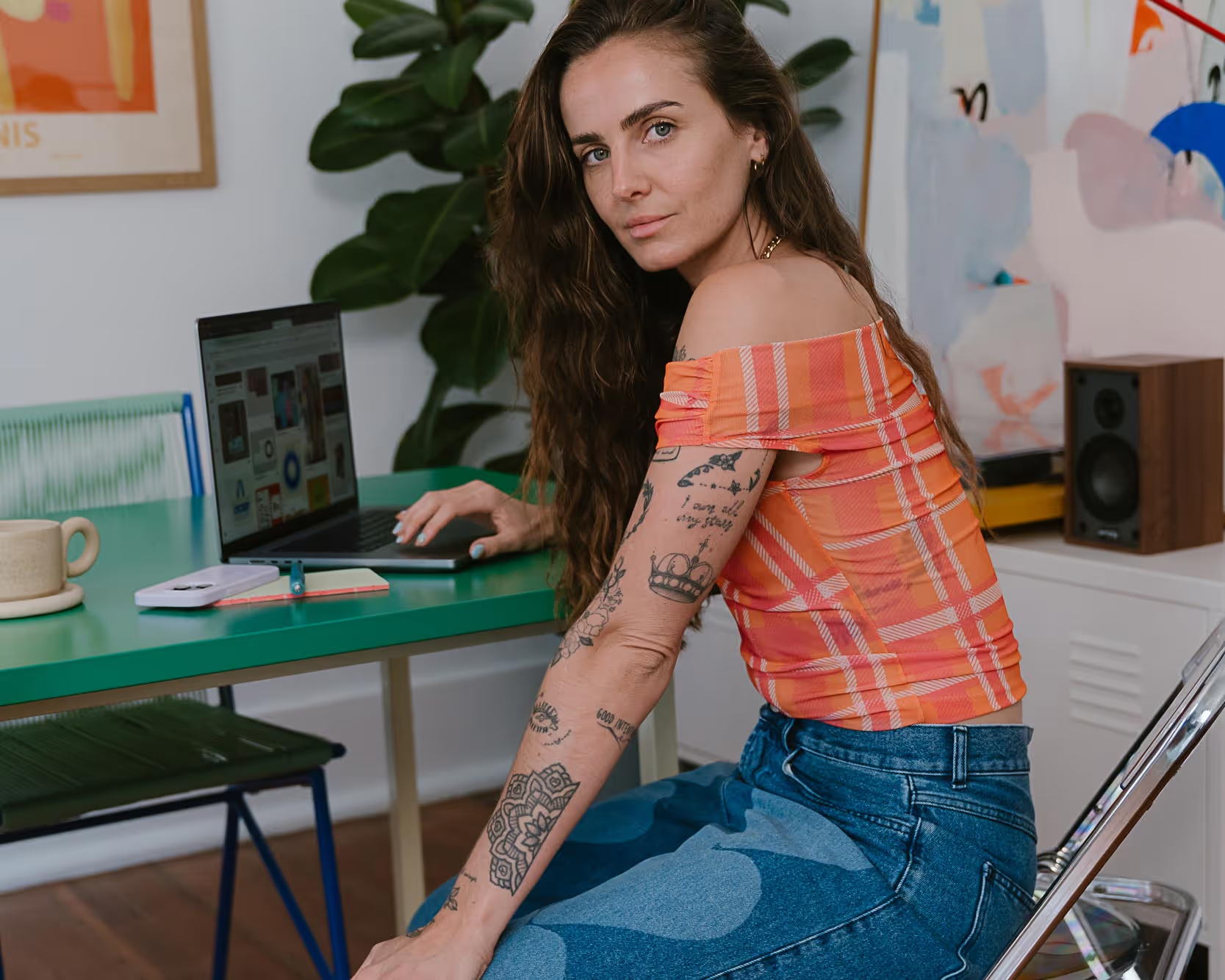
I'm Hannah May - Creative Director + Brand Advisor working with founders to turn their biggest ideas into brands that truly matter. Here is where I share the thinking behind the work. Brand insights, cultural commentary and observations from deep in the field of brand building.
How to Create a Brand Identity Your Audience Is Obsessed With
Seems like my best ideas are coming from connection calls at the moment. And its no surprise. When I get on a call with a client I'm really meeting them exactly where they are at when they are ready to build their brand. The questions, the concerns, the "how do you do it's"
I had a call yesterday with a really cool brand that is launching in London this March (they may even read this today and know who they are!). And at the end they asked me. "So how do you know what the audience is going to like from a brand perspective? How do we figure out the visual direction for our brand knowing that the community we want to build is going to fall in love with it?"
GREAT QUESTION - Let's break it down.
How I create a visual identity that speaks to the hearts, minds, desires and bank balances of your most ideal and engaged community of customers.
How do you research the visual world your audience already buys into?
We buy from (and stay loyal to) our favourite brands because they become an extension of how we see ourselves. They reinforce the identity we believe we have, the identity we want others to see, and the version of ourselves we're moving towards. In that way, brands aren't just functional purchases. They play a role in shaping our aspirational identity and the story we tell ourselves about who we are becoming.
This means that we can learn so much from looking at what brands our audience is currently buying into across categories. When I'm creating brands, I look at all the other brands, places, and spaces that the community is buying into and see what we can learn from them, both from an aesthetic point of view and from a world-building perspective.
What fashion brands do they love? What skincare do they buy into? Which cafés do they visit? What car do they drive? Where do they treat themselves? What other services do they pay for?
And especially, which brands sit within the same buying sphere of offer, product, or service.
What is a buying sphere?
I actually made the term "buying sphere" up, because I couldn't find a definition for it. But essentially, it means products, services, and experiences that require the same emotional and problem-based decision-making as your own, but are not in direct competition with you.
For instance, if you are opening a hair salon and looking for inspiration, I would look to: Cool nail bars, Haircare brands, Hair accessories brands, Beauty brands, Cafés, Supplement brands, Members' clubs, Spas.
All of these exist in the same purchasing sphere - self care, beauty, experiences - but are not in direct competition. If you can get a clear idea of the brand aesthetic and sentiment your audience is already buying into, you can use this as a powerful reference point for your own brand.
Should you build the brand you want, or the brand your audience wants?
OK, CONTROVERSIAL!!! A lot of brand builders would say that this is not a great way to approach it. That creating something that comes from an internal perspective of what looks and feels right won't work. BUT….
If you're building a design-led brand with a clear point of view on taste, impact, and style, and you allow it to reflect how you want to be perceived, it naturally attracts people who align with that vision.
When we create brands, we create from a place of deep strategic understanding of the brand we are building. From the purpose and the vision. The reason why we started. The feelings we want to evoke. The taste we want to curate. The brand personality and tone we want to convey.
And all of this leads towards the visual direction. For my own brand I am obsessed with colour. It seeps into everything I do. I could have said that colour is too much for my clients. It will put them off. But now thats the exact thing that my clients come to me for.
When we create only to appeal to an audience or fill a gap, we can become disconnected from the initial vision we wanted to bring to life. When creating brands, I work with the founder and team to shape a visual expression that reflects who they are and how they want to show up in the world. Like attracts like. So when we build with intention, meaning, depth, and purpose, the right people take notice.
What is the difference between being different and being distinctive?
Knowing who your audience is considering, and the market that you operate in, is a crucial part of building a visual identity that your audience is going to choose. But instead of always trying to fill a gap and be different to everyone else, create your own category of one by being distinctive.
Being different is often just trying to be different for the sake of it. Looking at the market and thinking, how can we do the opposite? But this risks creating a brand that feels so wildly different from what audience is used to in that category that we end up not being associated with what we actually sell. And that causes confusion.
Being distinctive is about recognition, resonance and knowing who you are. It's about choosing what you stand for and how you want to show up, and then owning it. It's having a point of differentiation that can be seen and felt, but that also feels totally aligned with the core of the brand you are building. This is about creating visual through-lines, hooks, and things that you become known for, that feel new and fresh, but still familiar.
Combine these three things when creating the visual identity for your brand and your audience WILL love the shit out of it :)
If creating a visual identity that your audience is genuinely obsessed with is what you're after we can help you do that.
Frequently Asked Questions
Start with your best customers. Look at what they follow, share and buy across categories — not just in your space. You're looking for patterns in taste, colour, vibe, and values. Map the brands and experiences they're drawn to. That's your visual compass.
This is where strategy meets creative instinct. If there's a real gap, the positioning work needs to bridge it. But honestly, more often than not, the founder's instinct is closer to right than they think. Trust it — and back it with research.
Too distinctive? No. Too different? Yes. Distinctive means recognisable and ownable — your audience sees it and knows it's you. Different for the sake of different just creates confusion. Distinctive brands feel familiar AND fresh. That's the sweet spot.
You May Also Like

2026 Marketing Shifts That Will Change the Way Your Brand Is Built
Four marketing shifts redefining how brands are built in 2026. From AI and human creativity to closed communities, here's what founders need to know now.